What Museum Is the Mona Lisa in Where Is the Transfiguration Art Located
In April, London's National Gallery unveils its highly anticipated Raphael showroom – an incredible collection of paintings, drawings, and more, all assembled for the start time under ane roof. Prestige reflects on the famed artist's brief but bright career, and the priceless legacy he left behind.
(Hero prototype: Particular from Raphael's 'Saint Catherine of Alexandria')
At the moment the art world is going crazy for NFTs, many of which are increasing in value at a boundless rate (equally evidenced by the headline grabbing toll tags attached to them). At the opposite end of the art world, however, there exists a finite amount of paintings, sculptures, and precious objects to which the term "priceless" has aptly been applied. No atypical value can be put on these tangible historic masterpieces, and unlike NFTs they are – for the most part – available to all through the generosity of the earth'southward most prestigious museums. This April, an incredible selection of undeniably priceless fine art will be on display when London'south National Gallery finally unveils their long-awaited Raphael retrospective.
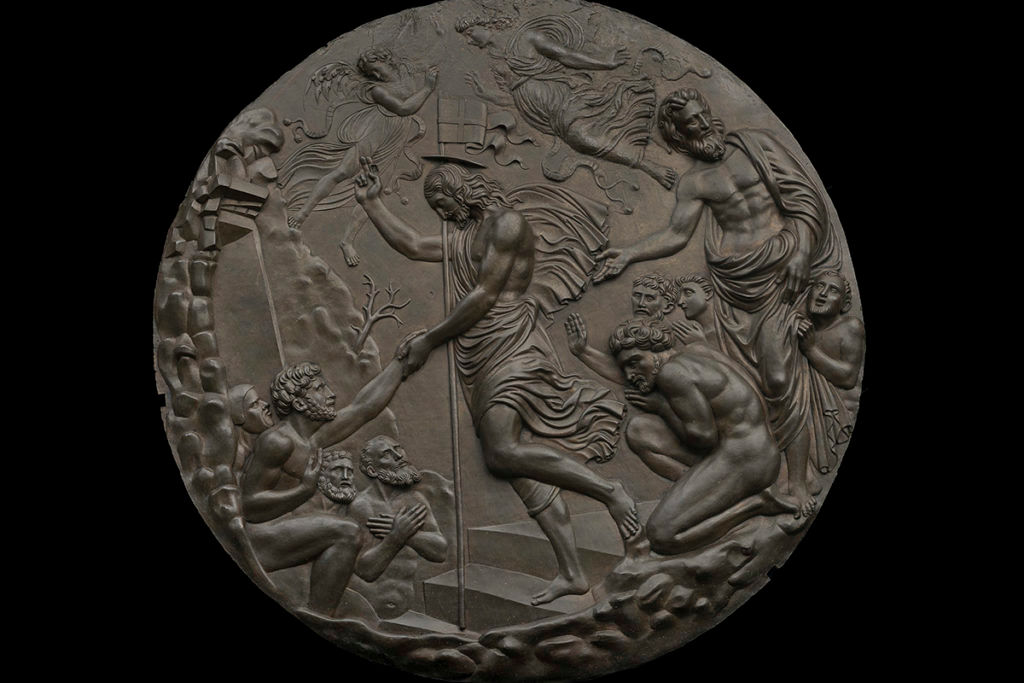
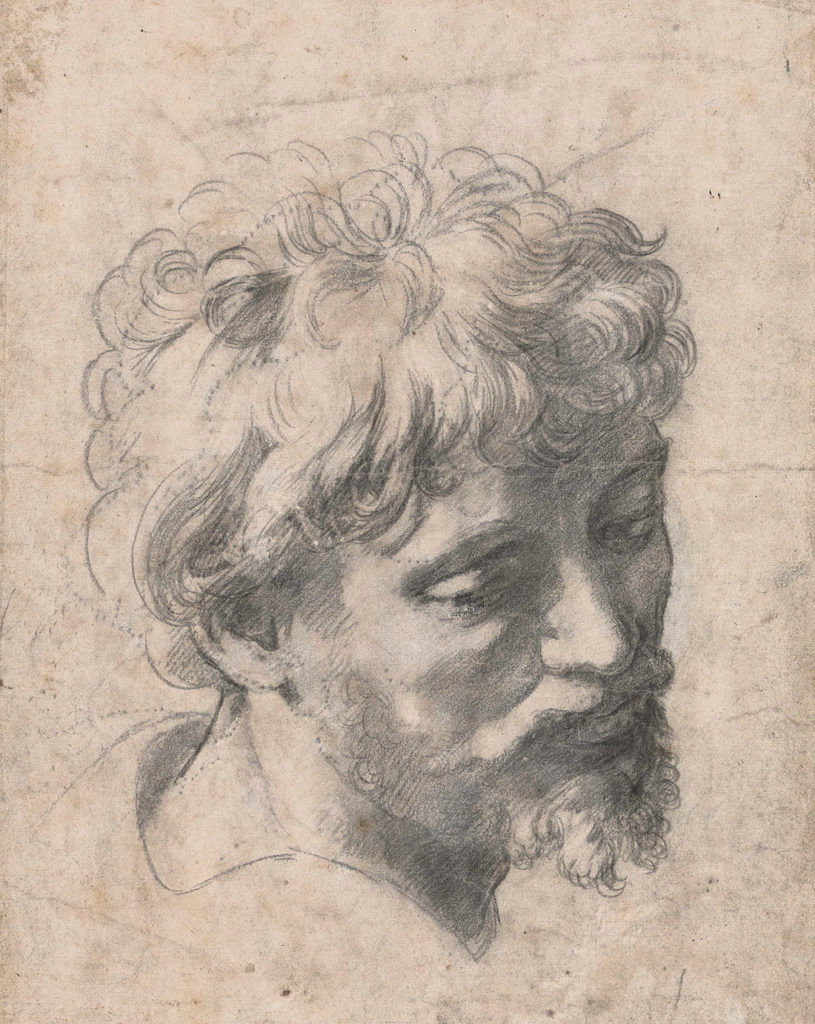
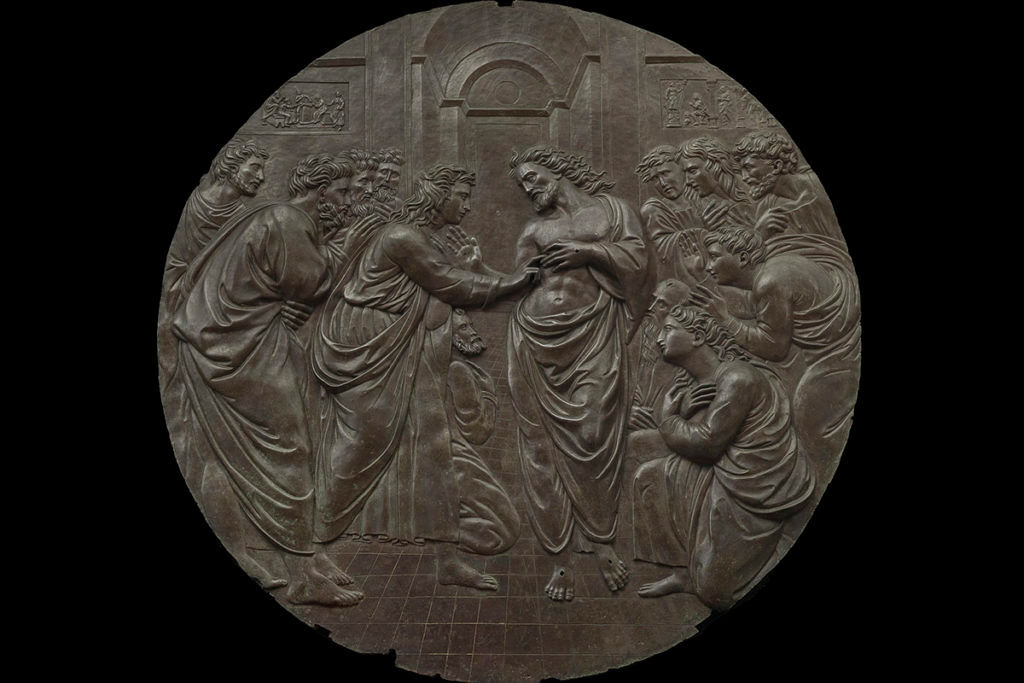
Scheduled to run from April ix to July 31, 'The Credit Suisse Exhibition: Raphael' will bring together numerous pieces from effectually the globe, with the aim of exploring this Renaissance master's complete career; examining not merely his celebrated paintings and drawings, but also his work in architecture, poetry, and designs for sculpture, tapestry, and prints. It'southward an unprecedented opportunity to see the full breadth of this unique artist's skill, creativity, and ingenuity, while also shining a spotlight on those who influenced Raphael, and those he himself after influenced.
In improver to the National Gallery's own collection of Raphaels and other related pieces, the upcoming exhibition will include pieces on loan from The Hermitage, the Louvre, the National Gallery of Fine art in Washington, the Prado Museum, the Museum of Fine Arts in Budapest, the Uffizi Museum, the Vatican Museum, and the privately owned Galleria Doria Pamphilj in Rome. Fifty-fifty some of the works that can't be transported to London, such as the monumental frescoed rooms in the Vatican Palace, will be presented in what the National Gallery calls "innovative ways".
He was born Raffaello Sanzio da Urbino, in 1483, in the Duchy of Urbino, not far from modern day Florence. He came from an artistic family, every bit his father was court painter to the Knuckles of Urbino. Raphael was just 11 when his father died, and historical records signal that he played a office in managing the family workshop from that point onwards. He later trained every bit an apprentice in the workshop of the acclaimed primary painter Pietro Perugino, and was declared a fully trained "master" himself by the twelvemonth 1500 (when he was all of 17).
In the years that followed, Raphael worked in various centres in Northern Italy but besides spent considerable time in Florence, which in the early 16th century was a hotbed of creativity. Together with his contemporaries Leonardo da Vinci (31 years his senior) and Michelangelo (viii twelvemonth his senior), he before long completed the High Renaissance trifecta of great Italian artists. And similar his legendary counterparts, he showed himself to be a master of many disciplines – prolific as a painter, draughtsman, architect, archaeologist, and more.
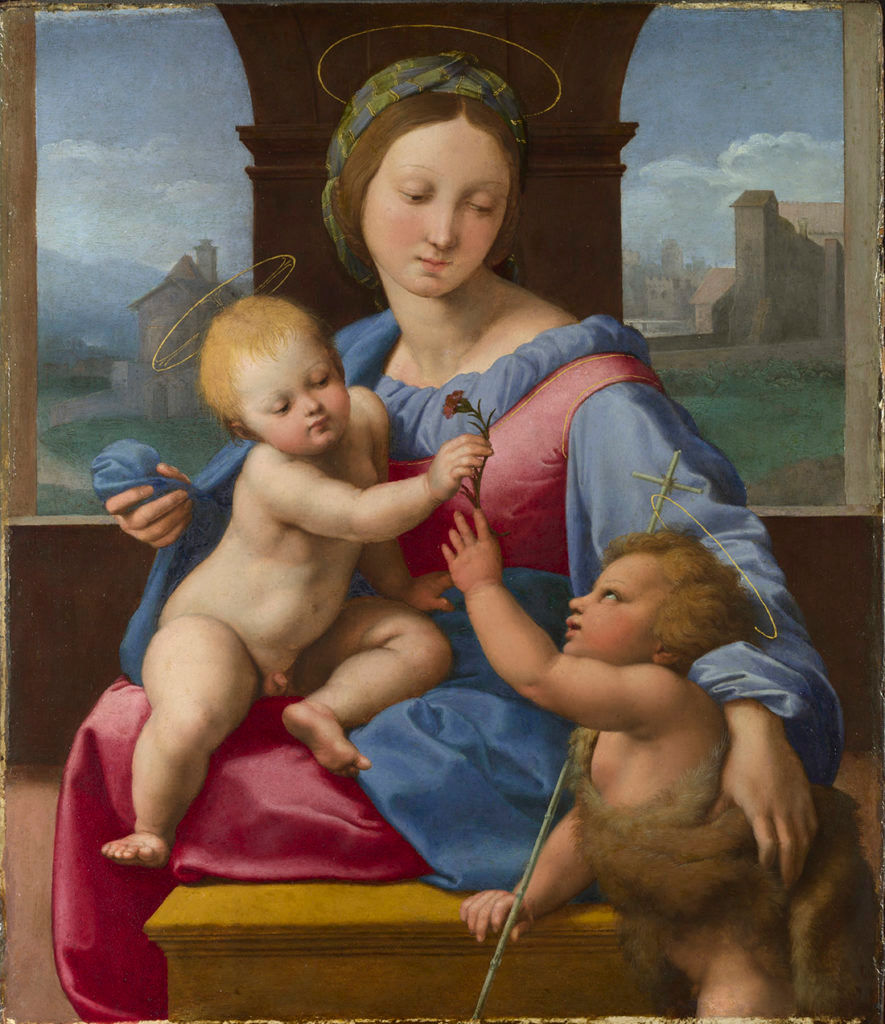
The influence that Leonardo had on young Raphael during those early years of the 1500s is well documented by fine art historians. In his portraits from this catamenia the figures began to accept on more dynamic and complex positioning, with one example borrowing from the 3-quarter length pyramidal composition of da Vinci'southward just-completed 'Mona Lisa'. Another of Leonardo'south compositional trademarks, namely the "Holy Family pyramid", was replicated in a series of works that rank among Raphael'due south almost famous paintings. A first-class case is 'The Garvagh Madonna' (also called 'Madonna and Child with the Infant Baptist'), which dates from well-nigh 1510 and is 1 of the prized pieces ready to be on brandish as part of the upcoming London evidence.
Subsequently Florence, Raphael moved to Rome – at the invitation of the new pope, Julius II – and the eternal city became his primary residence for the remainder of his life. The year that he arrived, 1508, was coincidentally the same twelvemonth that Michelangelo began painting the Sistine Chapel ceiling, and thus began one of the near bitter rivalries of the Renaissance, with the elderberry artist making no endeavour to conceal his disdain for the young upshot encroaching on his turf.
In 1511, a year before Michelangelo finally completed the Sistine Chapel, Raphael had already put the finishing touches on what would go his most famous fresco, 'The School of Athens'; an approximately 5- x 8-metre masterpiece commissioned by the pope as office of the decorations for the rooms now known as the Stanze di Raffaello, located in the Apostolic Palace of the Vatican. The painting depicts the peachy figures of classical antiquity, and amongst its cast of characters Raphael painted Leonardo every bit Plato, himself as Apelles of Kos (a renowned painter of aboriginal Greece), and poor Michelangelo equally the philosopher Heraclitus, who was known for his sour temper and bitterness towards all rivals.
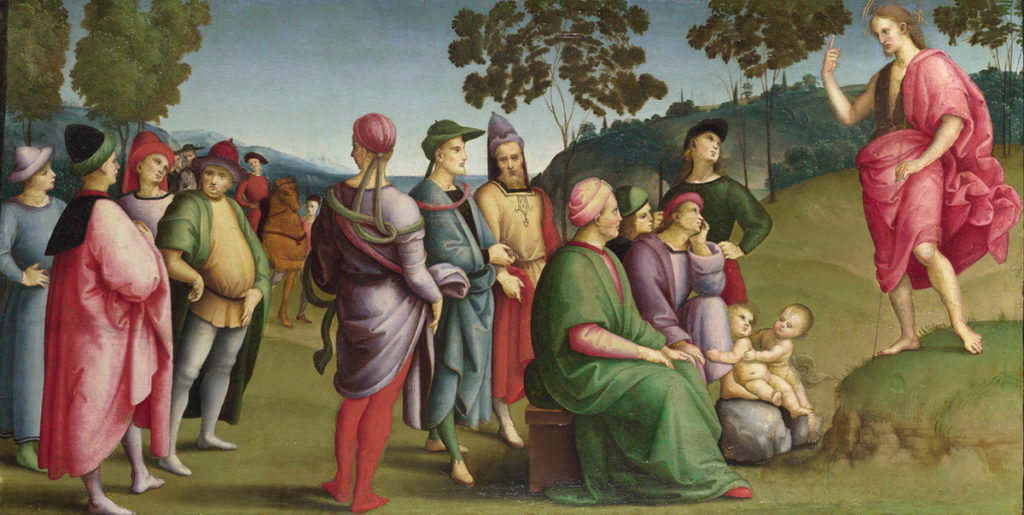
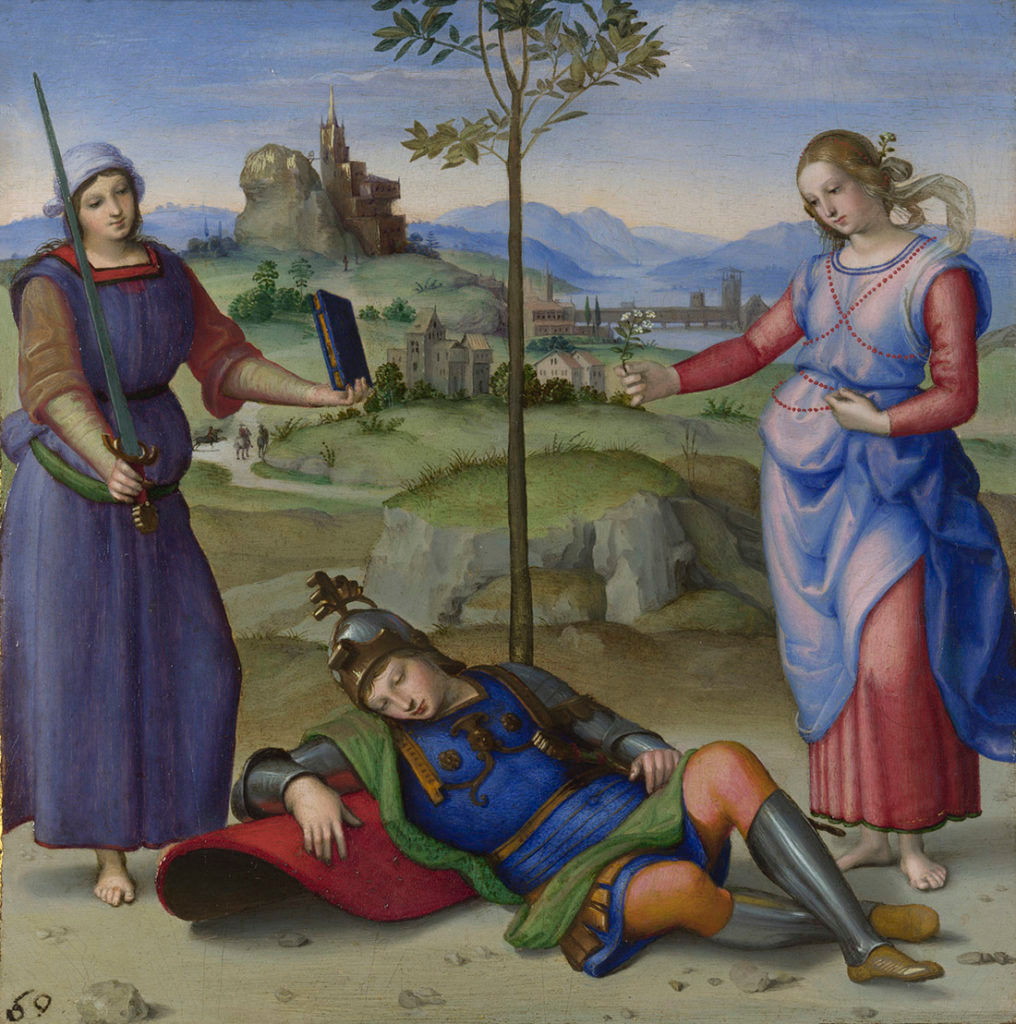
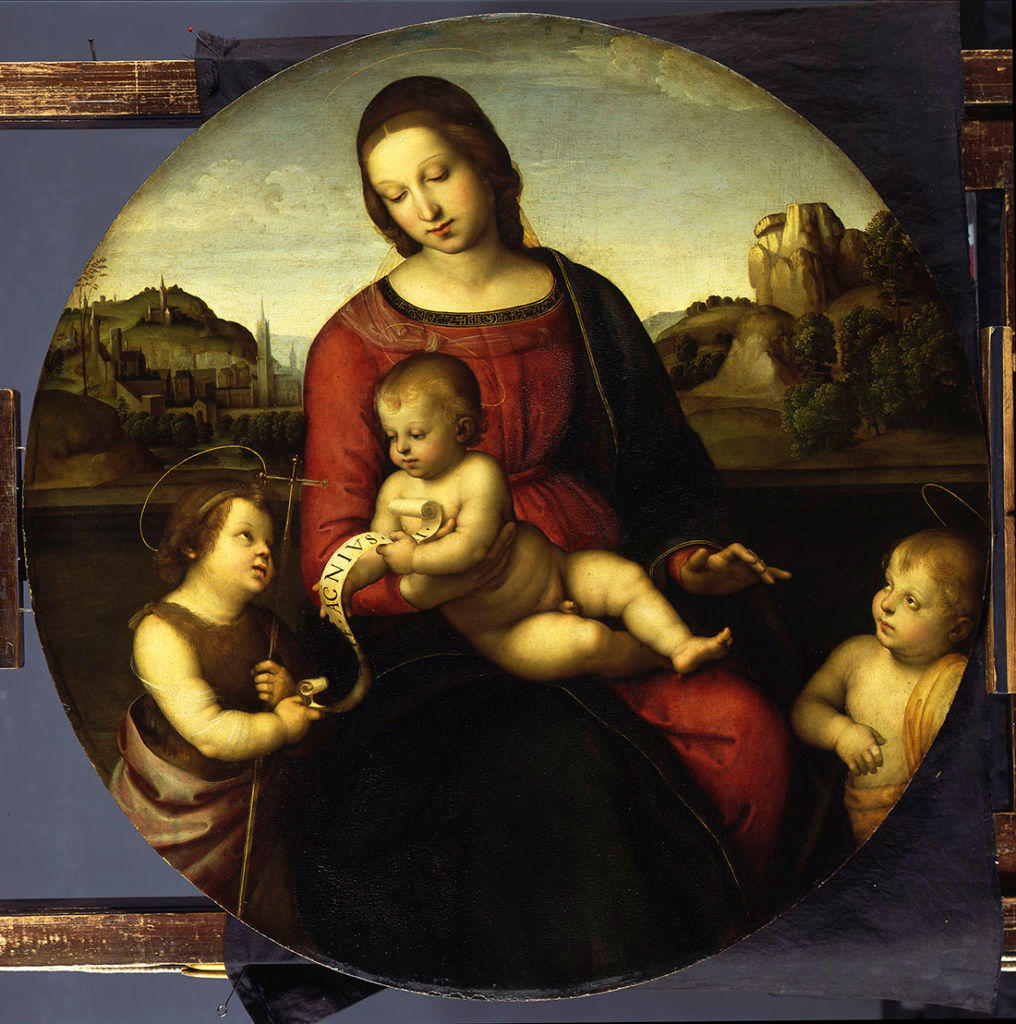
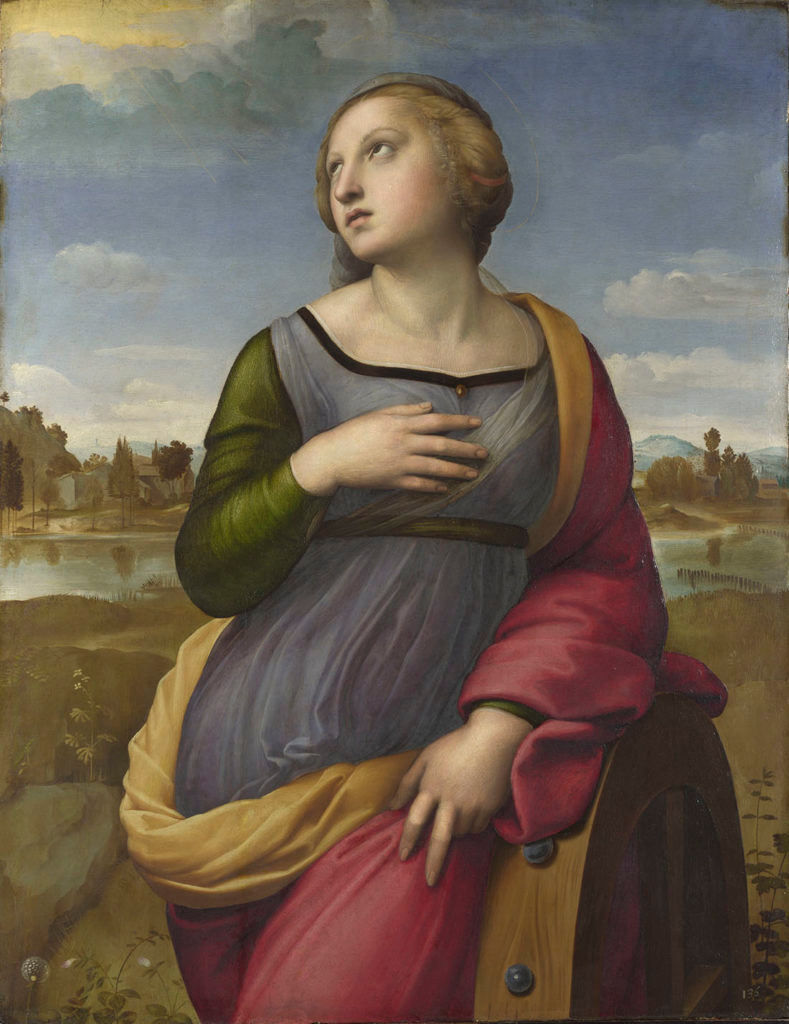
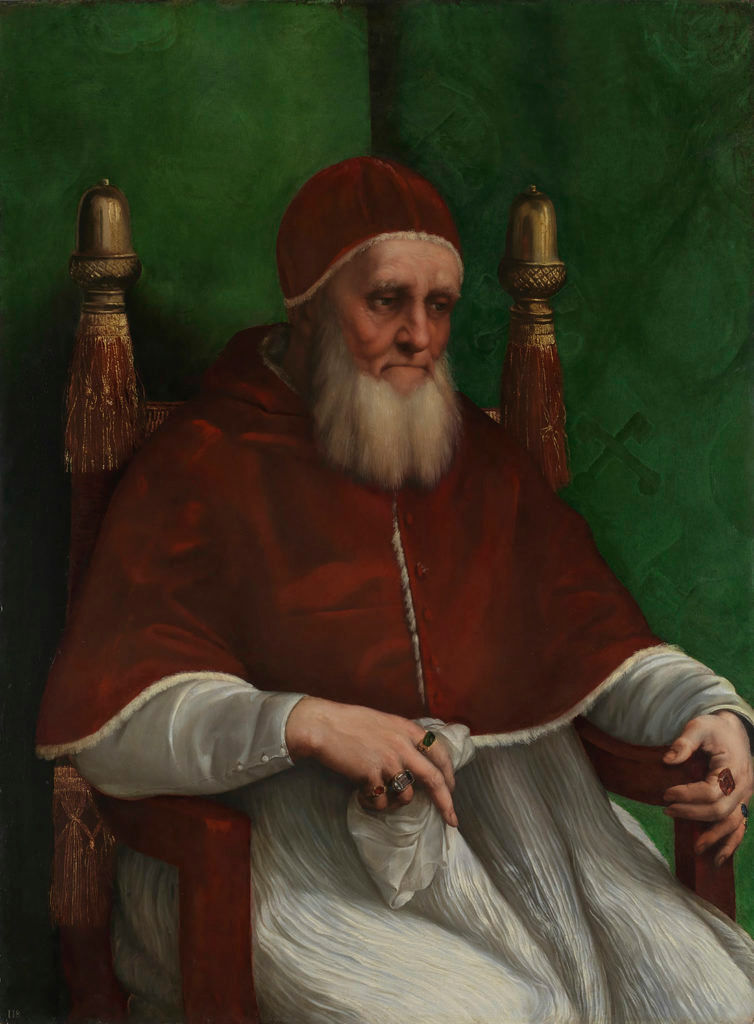
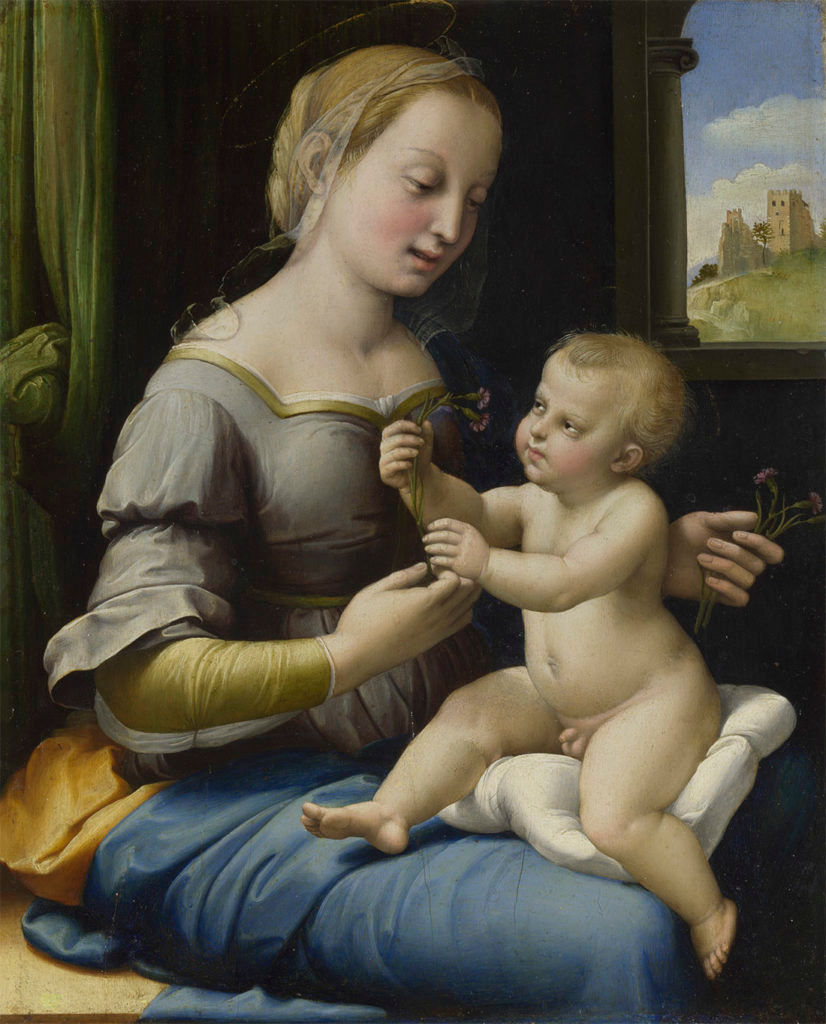
Even before revealing his talent for frescoes, young Raphael – who was and so still simply shy of thirty – had created numerous masterworks in oil, some of which are part of the National Gallery's own permanent collection. These mainly religiously themed paintings include: 'The Procession to Calvary' (1504-v); 'The Ansidei Madonna' (1505); 'The Terranuova Madonna' (1504-5); 'The Madonna of the Pinks' (1506-7); 'Saint Catherine of Alexandria' (circa 1507); and 'The Esterházy Madonna' (1508). In 1512, iv years after his motion to Rome, he completed the magnificent portrait of his benefactor Pope Julius II, which the ofttimes-quoted art biographer Giorgio Vasari later described by saying "it was and then lifelike and true it frightened everyone who saw it, as if information technology were the living human being himself".
Raphael'due south star continued to ascent during his time in Rome, and later on the death of Donato Bramante in 1514 he was appointed the architect in charge of completing Saint Peter's Basilica. From 1517 onwards he lived a life of exceeding condolement in the Palazzo Caprini, and was later fabricated a 'Groom of the Sleeping accommodation' of the pope – which gave him additional income and an elevated social condition – besides every bit a knight of the Papal Order of the Golden Spur. He was also said to accept had many romantic entanglements, and the cute painting known as 'La Fornarina' immortalises his main mistress in Rome, Margherita Luti (the daughter of a baker).
In the spring of 1520, at the age of 37, Raphael died – eight days afterward contracting a fever. His one thousand funeral was attended by large crowds, and it was even reported at the time that there were "four cardinals dressed in purple who carried his trunk, the hand of which was kissed by the Pope". And while his life was short by today's standards, his bear on and influence remain powerful to this twenty-four hours. His career spanned just two decades, but in that brief time he helped shaped the course of Western culture similar few artists have before or since.
The National Gallery's upcoming exhibition was originally scheduled for 2020, to coincide with the 500th ceremony of the artist's death, but the Covid crisis effectively scuttled those plans. Thankfully, the museum persevered with the projection, and the fruits of those labours will be on display till midway through the summertime. Of course, there actually doesn't demand to be whatsoever particular anniversary tie-in when information technology comes to staging a show such equally this, as these magnificent artworks are as timeless equally they are priceless.
This story get-go appeared on PrestigeOnline Thailand
slaughterwilloused.blogspot.com
Source: https://www.prestigeonline.com/sg/pursuits/art-culture/exploring-the-work-of-renaissance-artist-raphael/

Post a Comment for "What Museum Is the Mona Lisa in Where Is the Transfiguration Art Located"